
Mitsubishi LVP-SL2 projector lamp
The Mitsubishi LVP-SL2 takes lamp VLT-HC2LP, a 132 W lamp rated for 2,000 hours. It comes as a complete module, with the bulb already fitted in its housing. The same lamp is also sold under 3 other part numbers, all listed below. It fits 20 Mitsubishi models in total.
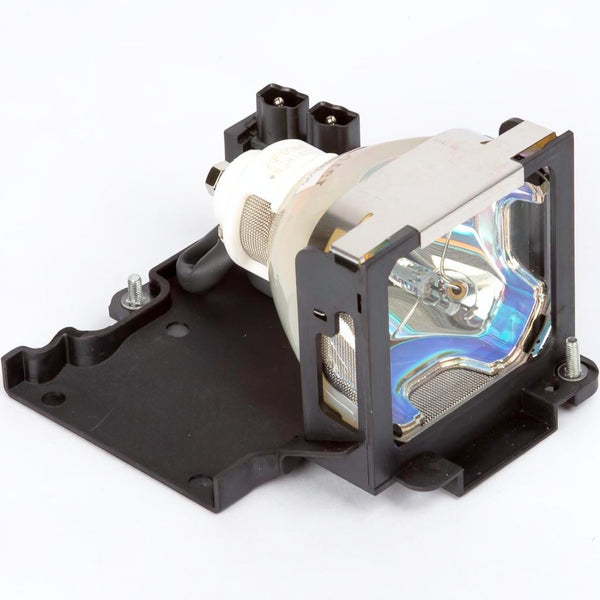
Replacing the Mitsubishi LVP-SL2 lamp.
The Mitsubishi LVP-SL2 uses the VLT-HC2LP lamp, also sold as VLT-XL1LP. This is a complete module with the bulb fitted in its housing. It is a 132W bulb rated for 2,000 hours of use. The VLT-XL1LP part number is an equivalent code for this same module.
It shares its lamp with nineteen other Mitsubishi models, including the LVP-AS10, LVP-AX10, LVP-HC1, LVP-HC2, and LVP-SL1. Owners of these projectors can also use this lamp.
Check the code on your old lamp before ordering. The module offers a quick swap, while the bare bulb option is cheaper but requires manual installation. Every lamp we sell carries a genuine OEM burner. Each one has a 180-day guarantee from the day it arrives, with a replacement or refund. After fitting, reset the lamp-hour counter from the projector's menu, and follow the user manual.
Checked against our catalogue and the projector's published specifications, October 2026.Every code this lamp is sold under.
The code moulded into your old lamp or printed on its housing may be any of these. If it appears here, it fits the Mitsubishi LVP-SL2.
Check the code before you order
The code on your old lamp or its housing should match one of the codes listed. Mitsubishi and third-party suppliers sell the same lamp under several numbers.
Not sure it's your model?
The model number is on a label on the base or rear of the projector, and in the on-screen menu under Information. Still unsure? Ask a specialist and we'll confirm.
Mitsubishi LVP-SL2 specifications.
The figures that matter when you replace the lamp, plus the projector's key specs.
This lamp also fits 19 other Mitsubishi models.
If your projector is one of these rather than the LVP-SL2, the same lamp is the correct part.
Common questions.
Which lamp does the Mitsubishi LVP-SL2 use?
The Mitsubishi LVP-SL2 uses the VLT-HC2LP lamp, a 132W bulb rated for 2,000 hours. It is sold as a complete module with the bulb fitted in its housing. The VLT-XL1LP is an equivalent part number for this same module.
What other part numbers fit the Mitsubishi LVP-SL2?
The Mitsubishi LVP-SL2 lamp is also sold as VLT-XL1LP. This part number is an equivalent code for the VLT-HC2LP module. Both numbers refer to the same 132W bulb in its housing.
How long does the Mitsubishi LVP-SL2 lamp last?
The Mitsubishi LVP-SL2 lamp has a rated life of 2,000 hours. You can check the lamp-hour reading in the projector's menu to see how much of that life has been used. Once the reading approaches the rated life, plan a replacement.
Should I buy the module or the bare bulb for the Mitsubishi LVP-SL2?
For the Mitsubishi LVP-SL2, buy the module (VLT-HC2LP) for the quicker swap. The module comes with the bulb already fitted in its housing. The bare bulb option is cheaper but requires you to move the bulb across by hand.
Which other Mitsubishi projectors use the same lamp?
Nineteen other Mitsubishi projectors use the same lamp as the LVP-SL2. These include the LVP-AS10, LVP-AX10, LVP-HC1, LVP-HC2, and LVP-SL1. Owners of these models can order the VLT-HC2LP module or the VLT-XL1LP equivalent.